

Solar Eclipse in Europe: Everything You Need to Know About the Total Solar Eclipse on August 12, 2026
On 12 August, a total solar eclipse will take place directly over Europe. This article provides an overview of the celestial event and everything you need to know to observe the sun safely: from the path of totality to solar eclipse glasses.
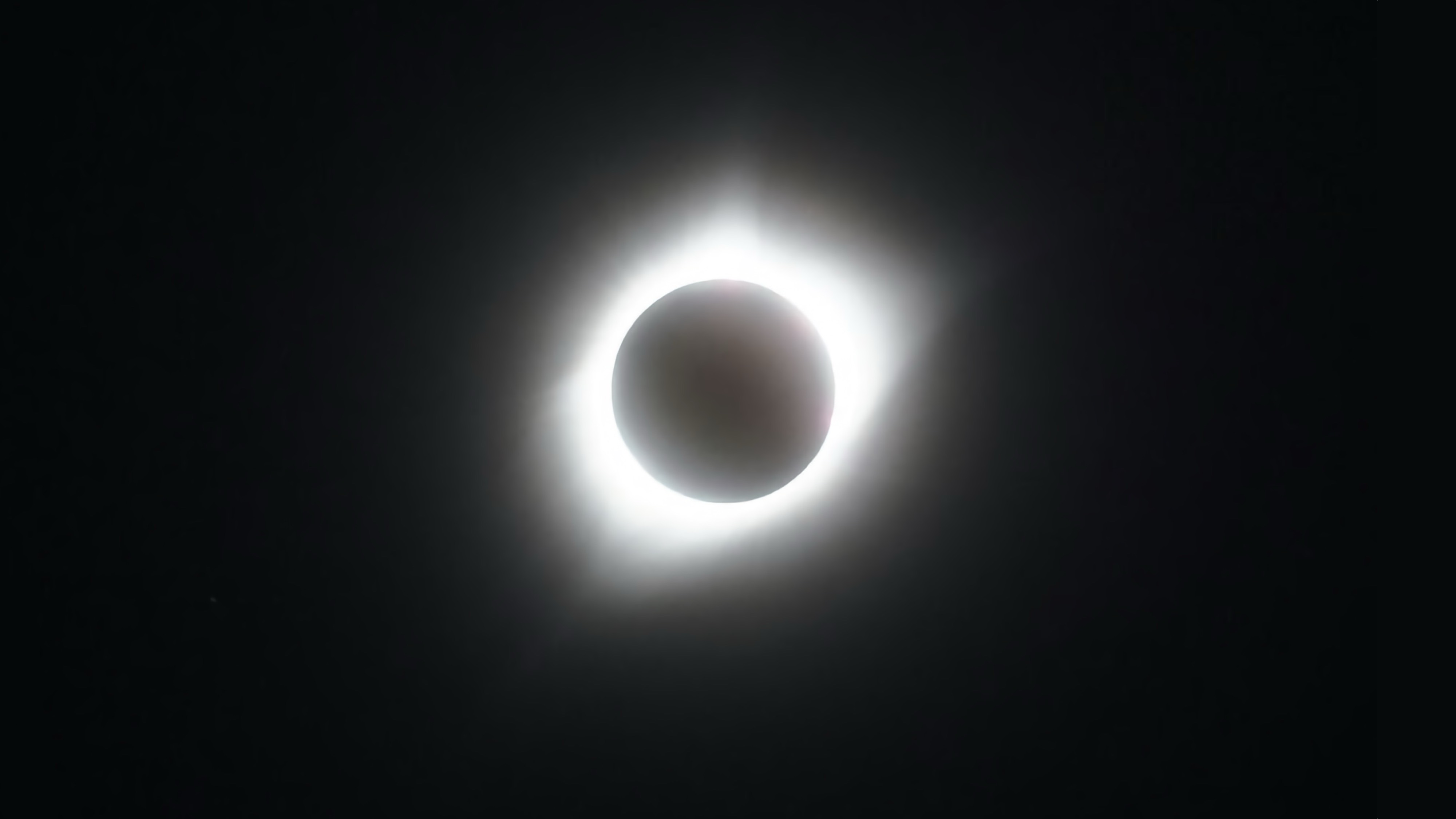
Do you remember August 11, 1999, when the sky over southern Germany turned dark? That day was anything but ordinary. Everyone knew we were going to see a total solar eclipse. But hardly anyone knew what it would really be like. I can still remember the preparations and the excitement on the day of the eclipse. What anticipation and what a mood among the people. It was one of a kind.
Perhaps you were there back then, too. Did you gaze up in awe through a pair of small solar eclipse glasses and experience that indescribable feeling when the moon completely covered the sun? That event left a lasting impression on many people and showed just how awe-inspiring nature and the universe can be. And now, after more than a quarter-century of waiting, the moment is almost here again.
A New Darkness for Europe
On August 12, 2026, the moon’s umbra will once again pass over Europe. It will be the first total solar eclipse on our continent since 1999, making it a “once-in-a-century event” that you definitely won’t want to miss.
But what makes this eclipse, aside from its rarity, so incredibly special? It takes place during the peak vacation season. As evening approaches, when the sun is low on the horizon. A cosmic spectacle in prime time!
The chances of clear skies in mid-August are excellent. But as if that weren't enough, the Perseid meteor shower will also light up the night sky that same night.
But let's get started.
1. The Total Solar Eclipse on August 12, 2026: An Overview
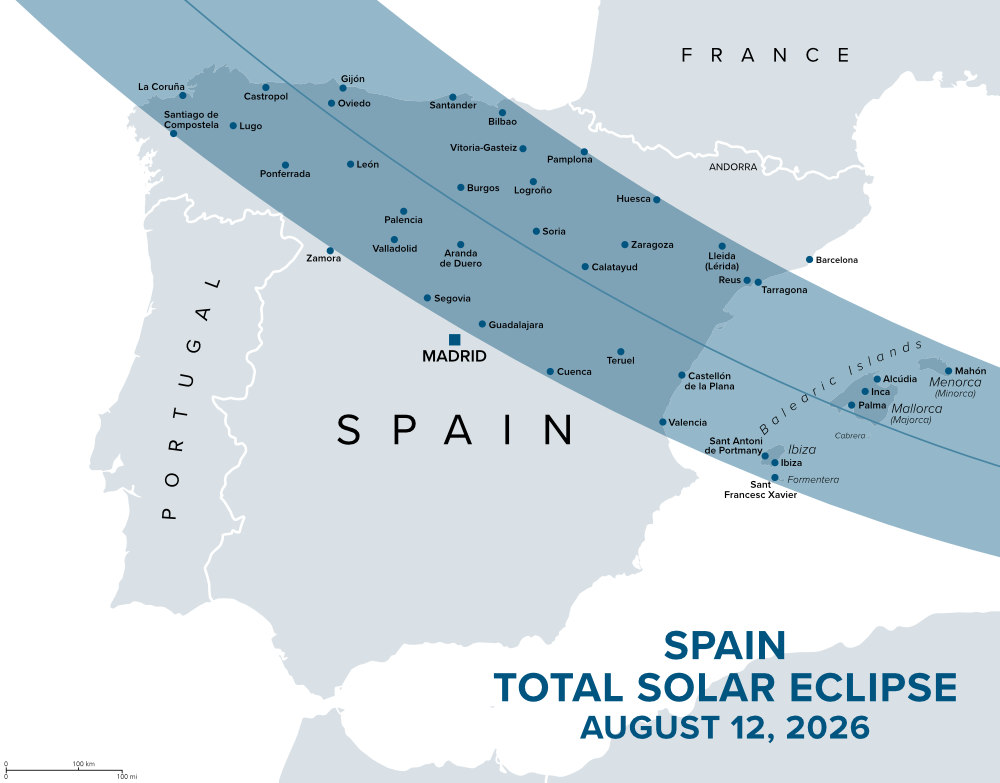
A total solar eclipse is, in itself, a rare gift from the heavens. But the fact that the path of totality passes over regions of the Earth that are so easily accessible is a true stroke of luck. On August 12, 2026, the moon’s shadow will sweep across the Arctic, Greenland, and western Iceland before reaching the European mainland in the evening. The main destination for most observers will be Spain, where the so-called "Path of Totality" stretches in a wide band from the northern coast to the Balearic Islands, such as Mallorca. Naturally, many people from all over Europe will travel there to see the Black Sun.
For us in Europe, the eclipse is quite significant. After all, it’s the first chance in 27 years to witness a total solar eclipse without having to travel halfway around the world. And let’s not forget that an entire generation has grown up without ever having seen one. Now we all have the chance again.
2. What is a total solar eclipse?
Have you ever wondered why the small Moon, of all things, can perfectly cover our huge Sun? It’s an incredible cosmic coincidence. The Sun is about 400 times larger than the Moon, but it’s also about 400 times farther away from us. Thanks to this amazing coincidence, both appear almost exactly the same size in the sky.
But how does a solar eclipse occur?
A solar eclipse can only occur during a new moon, when the Moon is positioned between the Earth and the Sun. However, because the Moon’s orbit is tilted by about 5 degrees relative to the Earth’s orbit, the Moon usually passes above or below the Sun. Only when the new moon is near one of the two points where the orbits intersect (known as the nodes) can its shadow fall on the Earth.
The key difference between a partial and a total eclipse is the visual experience. During a partial eclipse, the Sun is only partially obscured by the Moon. Even when the eclipse is at its peak, it becomes somewhat dim, but the sky remains bright. It is only during those few minutes of totality—when the Sun’s disk is completely obscured—that the true magic unfolds.
But how does that work exactly? What exactly happens?
Even though it’s daytime, it suddenly grows dark. The brightest stars and planets in the sky appear. The birds stop singing, and it suddenly grows quiet. The wind shifts, and the black silhouette of the moon glows ghostly with a brilliant solar corona. The experience feels a little surreal, as if it were not of this world. Yet, it is. Anyone who has experienced it once will never forget it: what a powerful and transformed atmosphere arises during such a solar eclipse.
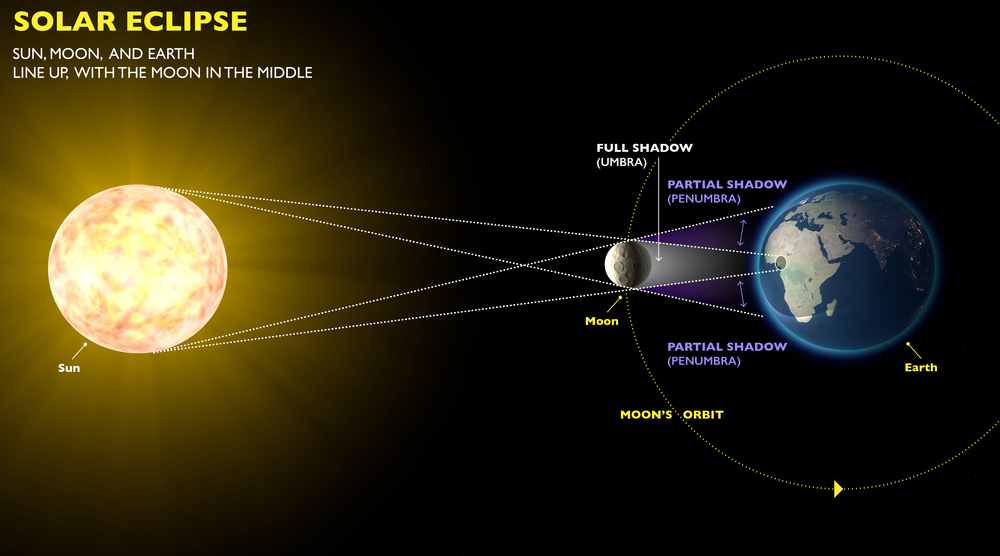 Solar eclipse, space, Naeblys, Shutterstock
3. The Path of Totality: Europe’s Rendezvous with the Moon’s Shadow
The path of the umbra begins in the Russian Arctic, passes over Greenland and western Iceland, and reaches the northern coast of Spain in the early evening. From there, it moves across the country toward the southeast, passing through cities such as A Coruña, Oviedo, Burgos, and León, before reaching the Balearic Islands at sunset.
What makes this eclipse special is the time of day it occurs. Since it takes place in the evening, the sun will be very low in the sky during totality. On the northern coast of Spain, the sun’s altitude will be only about 10 degrees above the horizon, and in Mallorca, just 4 degrees.
The low position of the sun offers a unique opportunity to capture stunning solar eclipse photos, including panoramic landscapes, with a camera.
This promises an incredibly amazing atmosphere, with the eclipsed sun hovering over the landscape. At the same time, however, it also means that an absolutely unobstructed view to the west—free of mountains, buildings, or trees—is essential for observing the eclipse.
Totality in Spain: A Selection of Locations.
4. Visibility in Germany: A Deeply Partial Spectacle
Even though we in Germany, Austria, and Switzerland won’t be able to experience a total eclipse, we can still look forward to an impressive celestial spectacle. The Moon will cover a very large portion of the Sun, leading to a noticeable decrease in daylight. In southwestern Germany, nearly 90% of the Sun’s disk will be obscured. That’s more than during most partial eclipses in recent decades.
The solar eclipse will also be visible here in the evening. For many observers (especially in the east), the sun will even set while it is still partially eclipsed. It’s a fascinating sight that also requires a clear view of the horizon.
Tip: It’s best to find a suitable spot with a very clear view of the western horizon a few days before the solar eclipse. An elevated vantage point would be even better.
In Hamburg and Berlin, the eclipse will begin around 7:15 p.m. CEST; in Frankfurt, Munich, and here in Landsberg, it will begin around 7:20 p.m.
Partial solar eclipse in Germany, a selection of cities
5. The Importance of the Right Equipment
An event like this obviously deserves to be observed with the best equipment, right? Imagine if you hadn’t prepared properly—the opportunity would be gone in an instant. Just like that, it’s over. And the quality of the observation is actually secondary; safety is the top priority.
Relying on cheap or unsuitable equipment during a solar eclipse would not only ruin the experience, but above all, it would be dangerous.
The right equipment is key to observing the Sun and the details of its surface.
Safety first!
This applies to the naked eye, binoculars, telescopes, and cameras. Even a sun that is 99% eclipsed is still bright enough to cause permanent damage to your retina within seconds. It is absolutely essential to protect your retina with 100% safety.
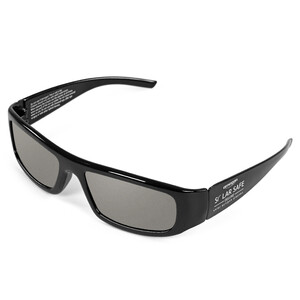
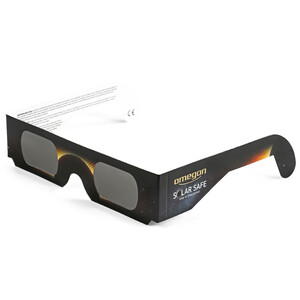
Be sure to check for compliance with the standard: Safe solar filters must meet the international ISO 12312-2 standard—such as our Omegon Sofi glasses. Only then can you be sure that they not only sufficiently reduce visible light but also block invisible UV and infrared radiation.
Checklist for safe observation:
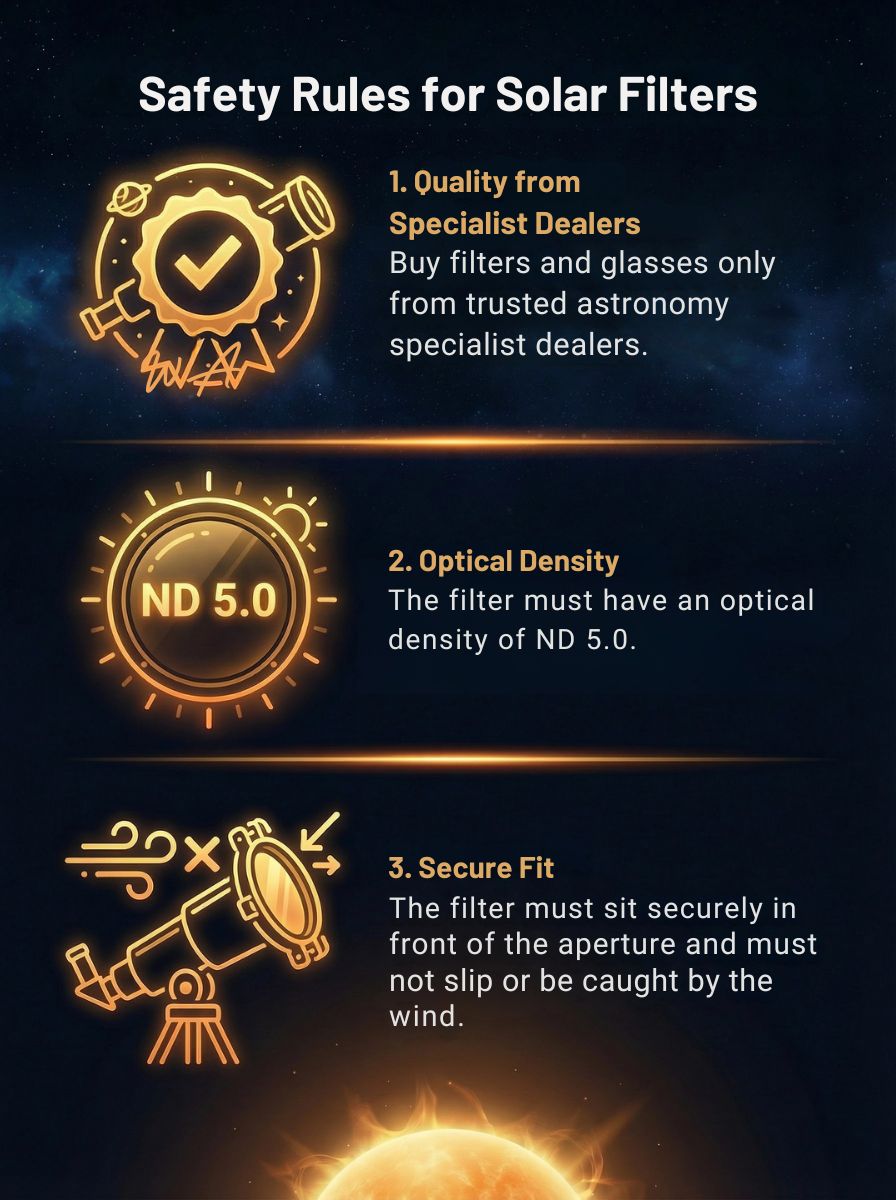
1. Quality from a specialty retailer: Buy filters and eyepieces only from reputable astronomy retailers.
2. Optical density: The filter must have an optical density of ND 5.0.
3. Secure fit: The filter must fit securely and tightly over the lens opening and must not be able to slip or be blown away by the wind.
Important notice for all solar observers!
We cannot stress this enough: Never—under any circumstances—look directly into the sun without a certified solar filter! You should also keep a close eye on children.
Keep the solar filter in front of the lens or your eye until just before totality.
Whether you’re using solar eclipse glasses, a camera, or a smart telescope: Don’t remove the filter until the very last seconds. Only when the bright light has almost faded and the diamond ring flashes. A glance without protection, even through a tiny gap in the sun that is not yet fully covered, can cause irreparable damage to your eyes and the camera sensor in a fraction of a second.
Only during the brief moment of total eclipse should you look directly at the sun without a filter.
As soon as the first ray of sunlight returns, immediately put the filter back over your eyes and camera.
6. The Gear Guide for 2026
So what exactly do you need? Here is an overview of the most important items of equipment:
1. Solar eclipse glasses: The absolute minimum for any observer is a pair of solar eclipse glasses. These are special protective glasses designed for observing the sun with the naked eye. These solar eclipse glasses (short for solar eclipse) allow you to look directly and safely at the sun and are perfect for tracking the entire partial phase.
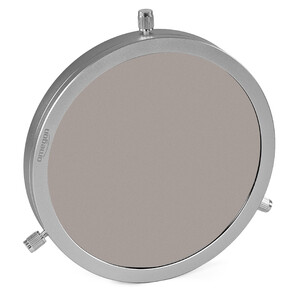
2. Solar filters for telescopes: To observe the Sun at high magnification, you need a filter that is attached in front of the aperture of your instrument. There are high-quality Baader AstroSolar sheets for DIY projects or pre-mounted sheet filters. Carefully measure the outer diameter of the telescope to find the correct size. With a suitable solar filter in front of the telescope’s aperture, you can also take excellent photographs of a solar eclipse. We offer various camera adapters for this purpose.
3. Solar filters for binoculars: There are also special solar filters available for binoculars that allow you to observe the sun at magnification.
For 50mm binoculars (such as the Omegon Blackstar 2.0 10x50), we offer ready-made filters in metal frames.
We also carry other binoculars for solar observation that come with built-in filters.
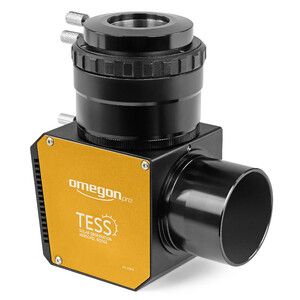
4. Herschel prism: For owners of refracting telescopes, this is the high-end solution. It is installed in place of the zenith mirror and provides an extremely sharp and high-contrast image of the Sun in white light. Note: A Herschel wedge is not intended for use with reflector telescopes.
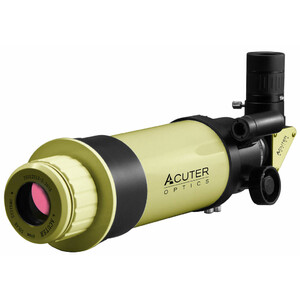
5. Specialized solar telescopes: If you want to delve deeper into solar observation, specialized solar telescopes are the best choice.
H-alpha telescopes reveal the Sun’s bubbling chromosphere with prominences and filaments. An unforgettable sight, even outside of solar eclipses.
6. Filters for photography: There are also suitable solar filters available for your camera lens. This will help you capture impressive images of the eclipse.
7. Useful accessories: A sun finder makes it much easier to locate the sun with your telescope. A black blanket or cloth that you drape over your head blocks out distracting ambient light and improves contrast.
As if a total solar eclipse weren’t enough, the sky will treat us to a second highlight on August 12, 2026. It is the peak of the Perseid meteor shower. This celestial event is almost—I almost said, in the umbra of the solar eclipse—overshadowed. But eventually, the sun will also disappear below the horizon, and we will once again be able to witness a truly impressive celestial event.
The total solar eclipse of 2026 is, of course, more than just an astronomical event. It is such a rare occurrence and a chance to experience the cosmos firsthand. I know that might sound a bit dramatic, but it’s actually true. There is hardly any other celestial event that has such a powerful emotional impact on people. Whether you’re traveling to Spain to watch the total solar eclipse or enjoying the truly deep partial eclipse from home: Be sure to prepare yourself and get the right equipment. Because the time until then will pass much faster than you think.
Browse our shop now and find the right equipment for stargazing.
Author: Marcus Schenk
Marcus is a stargazer, content creator and book author. He has been helping people to find the right telescope since 2006, nowadays through his writing and his videos. His book "Mein Weg zu den Sternen für dummies Junior" advises young people, and those who are still young at heart, what they can discover in the sky.
As a coffee junkie, he would love to have his high-end espresso machine by his side under the starry sky.