New generation planetary and autoguider camera: The IMX585 is a Sony Starvis II processor that enables high sensitivity and high dynamic range (HDR). It also improves sensitivity in the near-infrared range by approximately 1.7 times compared to the IMX485. The new QHY5III585M/C camera has a large full-well capacity of over 30 ke, about three times that of the previous generation QHY5III485C.
BSI, back-illuminated CMOS structure:
One benefit of the back-illuminated CMOS structure is improved sensitivity. In a typical front-illuminated sensor, photons from the target entering the photosensitive layer of the sensor must first pass through the metal wiring that is embedded just above the photosensitive layer. The wiring structure reflects some of the photons and reduces the efficiency of the sensor.
In the back- illuminated sensor the light is allowed to enter the photosensitive surface from the reverse side. In this case the sensor’s embedded wiring structure is below the photosensitive layer. As a result, more incoming photons strike the photosensitive layer and more electrons are generated and captured in the pixel well. This ratio of photon to electron production is called quantum efficiency. The higher the quantum efficiency the more efficient the sensor is at converting photons to electrons and hence the more sensitive the sensor is to capturing an image of something dim.
ROI framerate
- 1920X1080: @8Bit 115.6fps, @16Bit 62.1fps
- 800X600: @8Bit 187.2fps, @16Bit 100.5fps
- 480X480: @8Bit 221.2fps, @16Bit 118.5fps
- 1236X1032: @8Bit 304fps, @16Bit 152fps
- 800X600: @8Bit 439.6fps, @16Bit 221.9fps
- 480X480: @8Bit 519.6fps @16Bit 262.8fps
512MB DDR3:
The internal 512MB DDR3 image buffer effectively reduces the pressure on computer transfer. This is a great help for planetary photography, where large amounts of data often need to be written in a short time. Some of the deep sky astrophotography cameras on the market today often only have 256 MB. This is a real bottleneck and source of image errors.
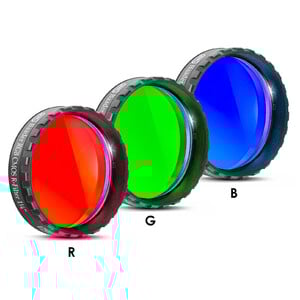
Colour or mono? Black and white cameras have the advantage of higher sensitivity and resolution than colour cameras. However, more effort is required to obtain a colour image. You also need colour filters and a filter wheel